



The growth of Islamic finance is one of the most transformative shifts in global banking.
With assets projected to reach $3.8 trillion by 2025 and nearly two billion Muslims still underserved, the opportunity ahead is undeniable.
But while demand accelerates, many Islamic banks remain held back — not by principles or potential, but by technology.
Islamic finance is driven by principles
At its heart, Islamic finance is guided by values — trust, fairness, transparency, and ethical responsibility.
These are more than words on a mission statement; they are the foundation upon which every Shari’ah-compliant product is built.
Yet in an era where digital capability influences customer trust, those values cannot be upheld by governance alone.
They must be embedded and delivered through technology. And this is where many institutions are quietly faltering.
Legacy systems — once a safeguard of stability — are now cracking under the weight of modern expectations.
The very technology that is used to protect banks is increasingly becoming their biggest liability.
Legacy systems are undermining Islamic banking values
Across the Middle East, Africa, and Asia-Pacific, a significant number of Islamic banks continue to operate on technology built before the smartphone era.
In fact, research shows 70% of large banks in the Middle East still run on such outdated infrastructure, while 68% of IT budgets in APAC are spent just maintaining these systems.
Think about that. That’s 68% of a budget that could be spent on innovation and a competitive edge. .
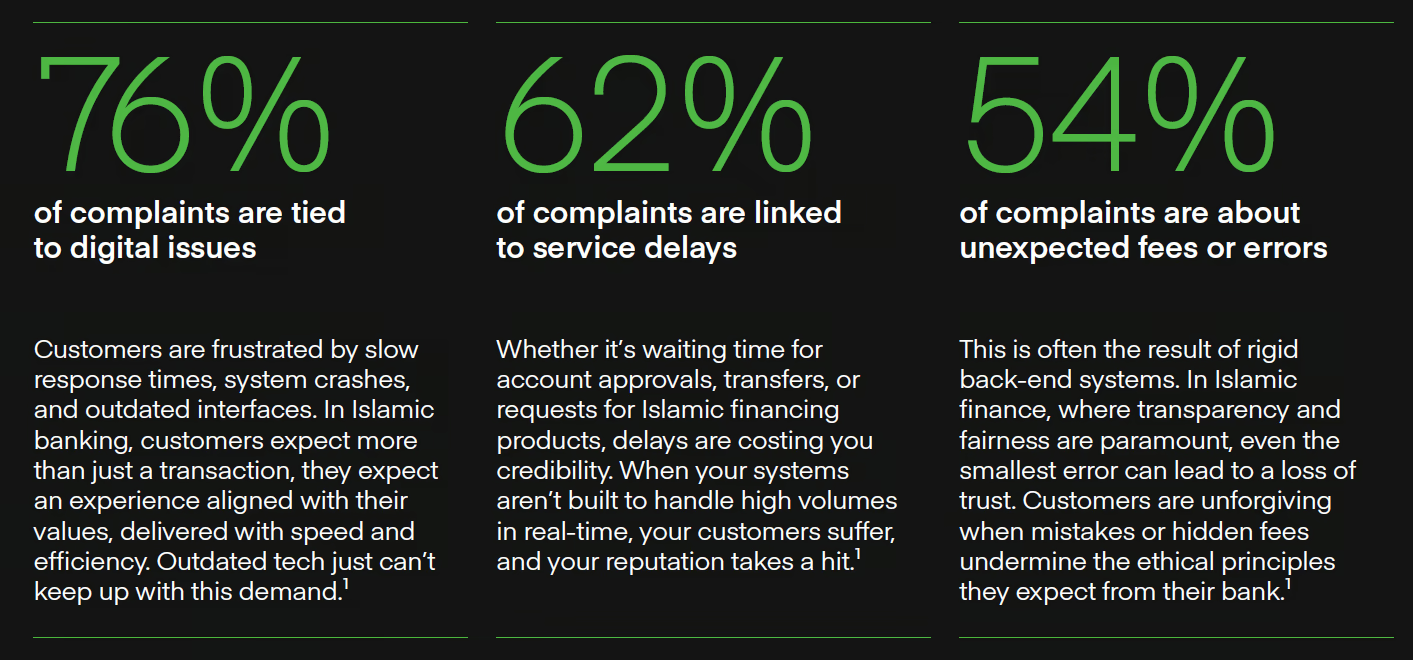
The impact is clear and measurable. In the last two years, 76% of customer complaints in Islamic banking were tied to digital failures — outages, login issues, billing errors.
These aren’t mere inconveniences; they’re symptoms of a deeper problem.
When systems fail, trust suffers. . And in Islamic banking, trust isn’t just a competitive differentiator — it’s a religious and ethical obligation.
Rebuilding the Foundation — Not Just the Facade
True digital transformation isn’t about continuously patching up what’s broken – something which frankly does very little to restore customer trust anyway.
It’s about rebuilding on a new foundation — one that enables agility, transparency, and compliance without compromise.
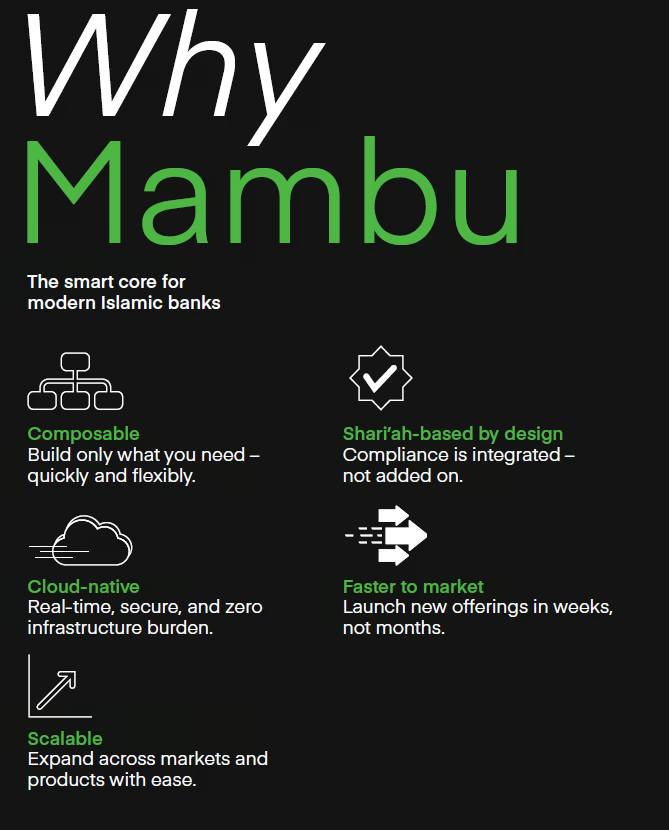
At Mambu, we’ve helped Islamic banks do exactly that. Our composable core banking platform empowers institutions to design and launch Shari’ah-compliant products in weeks, not years.
With Mambu, you can:
• Launch Islamic banking products faster: Bring innovative Shari’ah-based products to market in weeks, not years, free from the limitations of legacy systems.
• Strengthen governance and transparency: Mitigate risk and increase accountability with fully automated and auditable profit-sharing workflows.
• Operate dual-banking strategies seamlessly: For institutions with diverse portfolios, our platform enables you to manage both Islamic and conventional banking operations from a single, modern core, ensuring full operations segregation and alignment with Shari’ah principles.
• Enhance customer trust: Provide transparent and fair profit distribution that aligns with customer expectations and ethical finance principles
The time to modernise is now
The transformation of Islamic finance is already underway. Those who act early are positioning themselves not just for growth, but for leadership.
Modern, composable technology is enabling Islamic banks to honour their values while scaling for the future — serving customers faster, with greater transparency, and with the agility of today’s market demands.
The message from our recent discussions at IFN events across the region is clear: the principles of Islamic finance date far back , but the technology supporting them cannot
It’s time to stop patching something that is broken and no longer fit for purpose. It’s time to start building the future of Islamic banking upon stronger digital foundations.
Download Mambu’s report, Islamic Banking Without the Weight of Legacy Technology — your first step towards gaining the insights needed to stay relevant to your customers and scale your business for the future.
Featured image: Edited by Fintech News Malaysia, based on image by pikisuperstar via Freepik
