



Fuel costs remain one of the most unpredictable expenses for Filipino motorists as pump prices have moved up again recently, and drivers are feeling the difference every time they gas up.
Even a small increase can add up quickly for households that rely on regular fuel spending, especially when the same vehicle is used for daily commutes or work.
Luckily, these days, more banks and financial institutions are now trying to turn that everyday expense into a rewards opportunity, with drivers looking for a fuel rebate in the Philippines can find offers across different fuel stations.

But the savings do not all work the same way.
Some cards return part of the fuel transaction as cashback after it is posted, and there are others that offer rewards points or give direct peso-per-litre discounts at the pump.
The actual value also depends on where the card can be used, whether the offer has a monthly or annual cap, and whether the promo is still active.
A card tied to Shell, Petron, Unioil or Caltex, for instance, may work well for drivers who already use that station regularly. And a more flexible card may suit those who fill up wherever fuel is cheaper or more convenient.
Recently, digital banks and app-based financial platforms have also joined to widen the options for Filipino motorists, especially for users who prefer debit cards with fuel cashback in the Philippines instead of another credit line.
What to Check Before Choosing a Fuel Rebate Card
Before we begin, drivers should get a few things clear. Fuel rebate offers can look attractive when the headline rate is high, but the card’s rules decide how much the cardholder can actually save.
1. Check where the fuel savings apply
Drivers should check station coverage first. Some offers work across local gas stations as long as the transaction qualifies as an eligible fuel purchase.
Other offers only apply at selected partner stations. Drivers who rarely gas up at those locations may not get much value from a high rebate.
2. Understand how the savings are credited
Motorists in the Philippines should check how the savings work before comparing rates.
Percentage rebates usually appear after the transaction is posted, so the cardholder pays the full amount first and receives the value later. Peso-per-litre discounts reduce the pump price at the point of payment.
3. Watch the rebate caps and promo dates
Monthly or annual caps can limit the final value. The headline rate may look strong at first, but the bank stops giving additional value once the cardholder reaches the cap.
Promo periods also deserve attention because some fuel discounts only run for a few months.
4. Check non-fuel spending requirements
Some cards require spending outside fuel purchases before the bank gives the highest rebate rate. Drivers who do not normally use the same card for other expenses may not get the advertised rate consistently.
5. Decide between a credit card and a debit card
Filipino motorists should also choose the card type based on how they manage their money.
Credit cards often come with stronger rebate structures and larger caps. Debit cards may suit users who want fuel cashback or rewards without taking on another credit line.
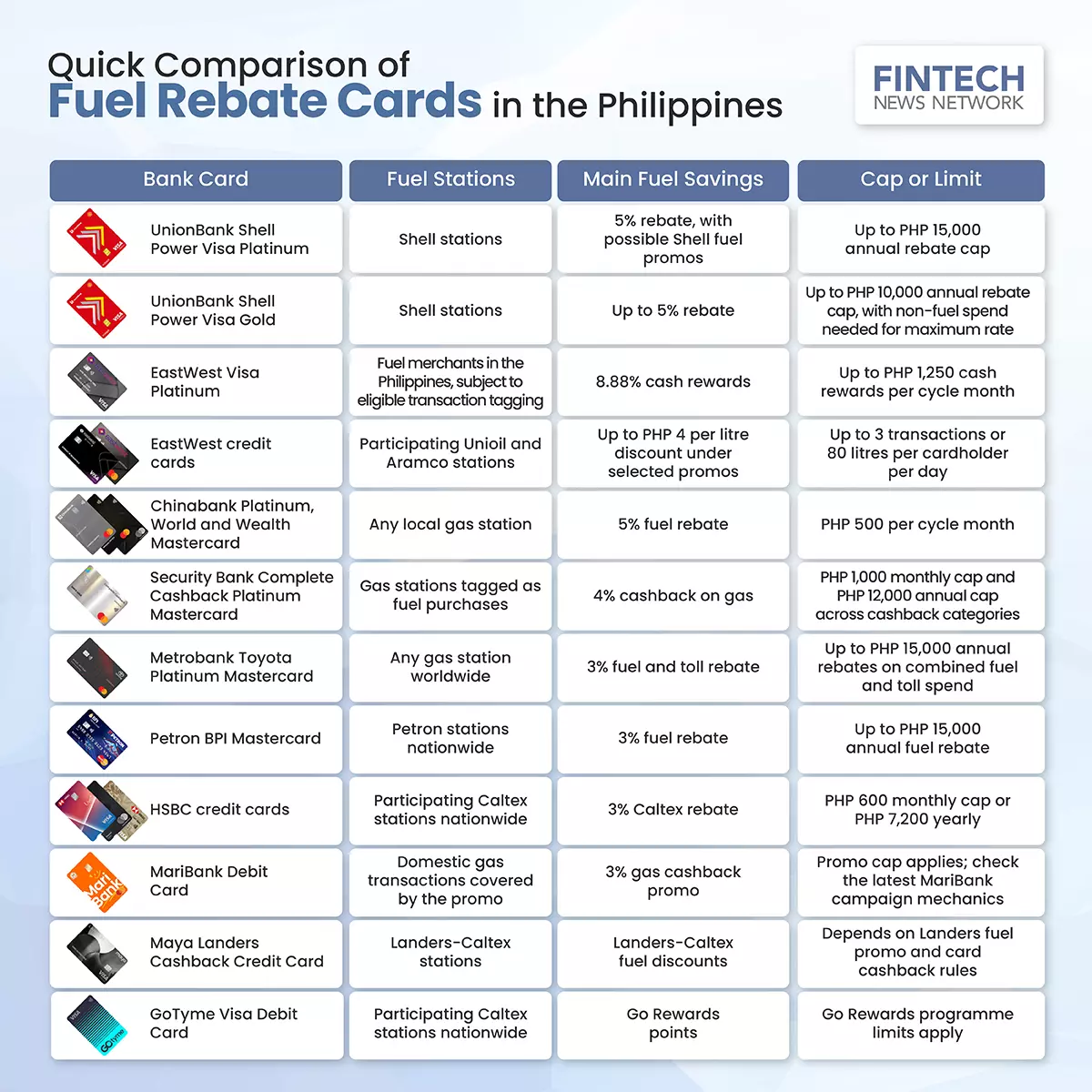
Quick Comparison of Fuel Rebate Cards in the Philippines
With those differences in mind, here is a guide that looks at banks and financial institutions offering fuel rebates and discounts in the Philippines.
The comparison covers credit cards, debit cards and partner fuel station offers, with a focus on how each option works and where the savings apply.
Here is a closer look at the fuel rebate options available in the Philippines, and the drivers they may suit.
Last Updated: 23 June 2026
UnionBank Shell Power Visa
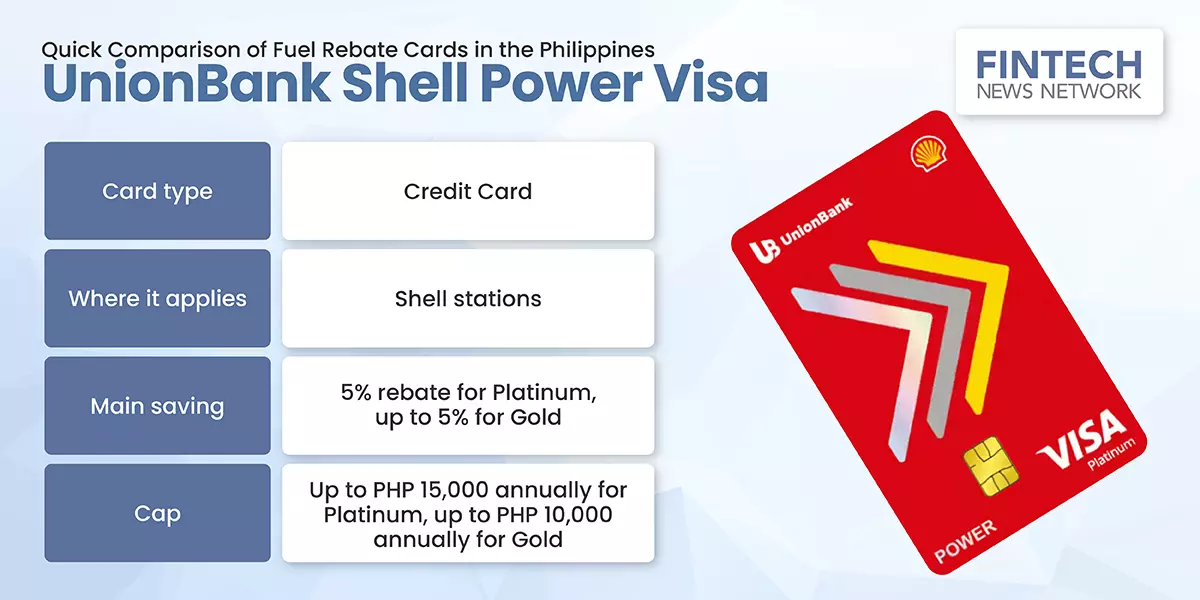
UnionBank’s Shell Power Visa cards are designed for motorists who regularly fuel up at Shell.
The Platinum card is the stronger of the two because it gives a flat 5% rebate on eligible Shell fuel purchases and does not require monthly out-of-store spending to reach the maximum rate.
The Gold card can also reach up to 5%, but cardholders usually need to meet a non-fuel spend requirement to unlock the higher rebate.
EastWest Visa Platinum

EastWest Visa Platinum stands out because of its high cashback rate.
The card offers 8.88% cash rewards on promoted categories, including fuel, which makes it one of the more eye-catching fuel rebate credit cards in the Philippines.
The monthly cap matters, though because a high percentage rate becomes less powerful once the cardholder reaches the cash rewards limit.
EastWest Unioil Fuel Discount

EastWest also has fuel discount promos with Unioil. Unlike a percentage rebate, this type of offer gives a fixed peso discount per litre, which drivers can feel immediately at the pump.
For its 2026 promo, EastWest lists the offer as valid at participating Unioil and Aramco stations that accept credit card transactions.
The promo is also subject to daily usage limits, including a maximum of three transactions or an accumulated 80 litres per cardholder per day.
A peso-per-litre discount can be useful when fuel prices are lower. During higher fuel price periods, a percentage rebate may sometimes deliver better value, depending on the cap.
Chinabank Platinum, World and Wealth Mastercard

Chinabank’s fuel rebate offer is useful because it is not tied to only one fuel brand.
Eligible Platinum, World and Wealth Mastercard cardholders can earn 5% rebates when they fuel up at local gas stations.
The main limitation is the cap. A PHP 500 cycle-month cap means the card may work better for light to moderate drivers than heavy fuel spenders.
Security Bank Complete Cashback Platinum Mastercard
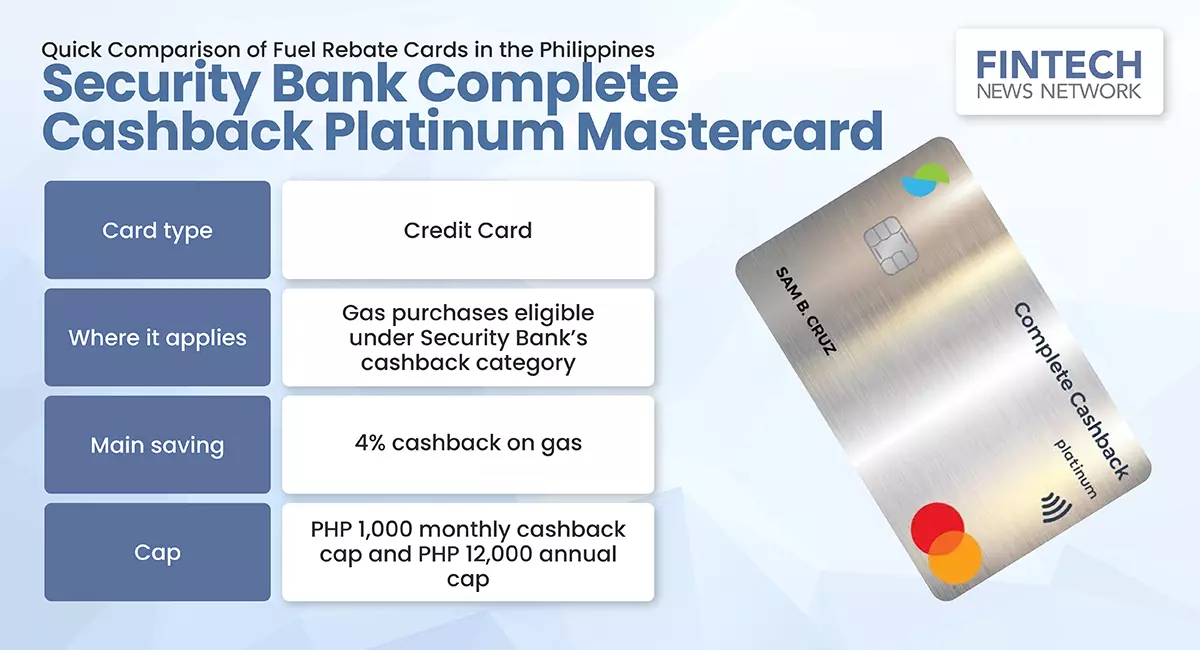
Security Bank’s Complete Cashback Platinum Mastercard takes a broader cashback approach, giving cardholders rewards across everyday spending categories, including gas.
The fuel cashback rate is 4%, which is lower than some specialist fuel cards but still practical.
The card works better for households that want one cashback card for several everyday expenses instead of a card only for gas.
Metrobank Toyota Platinum Mastercard

Metrobank’s Toyota Platinum Mastercard is a strong fit for drivers who want one card for fuel, tolls and as the name suggests, any Toyota-related spending.
The card offers a 3% rebate on fuel and toll transactions worldwide, with up to PHP 15,000 annual rebates on combined fuel and toll spend.
It also includes Toyota-related perks, which make the card more relevant for Toyota owners than general motorists.
Petron BPI Mastercard
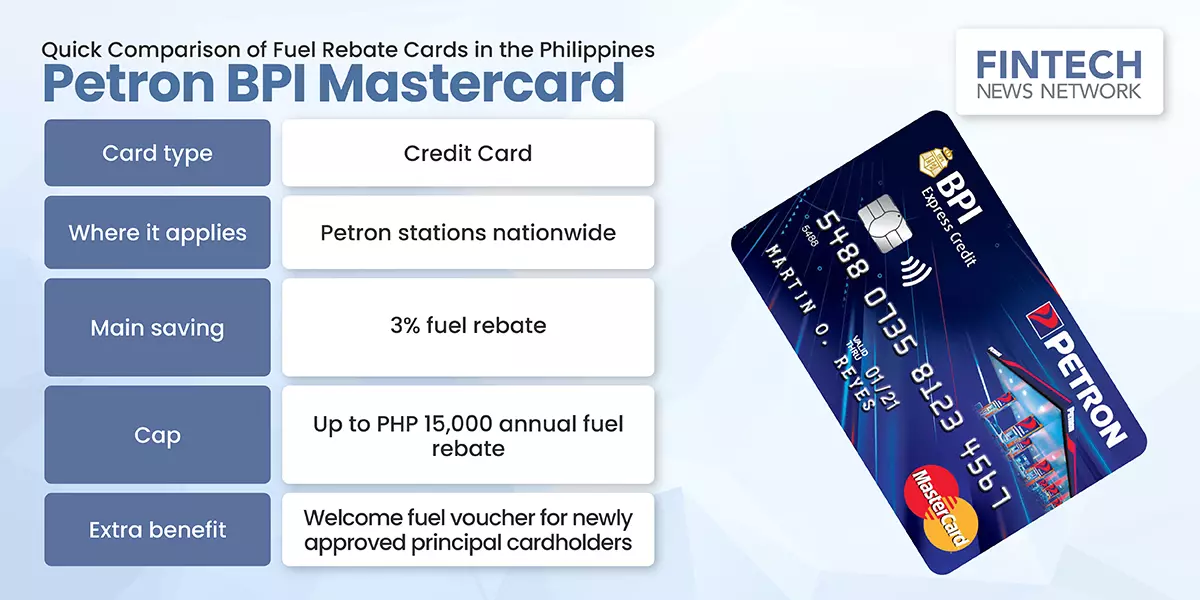
The Petron BPI Mastercard from Bank of the Philippine Islands is one of the simpler fuel rebate cards in the Philippines.
Cardholders earn a 3% fuel rebate when they gas up at Petron stations nationwide.
The annual cap is also relatively high, which makes the card easier to understand for motorists who are loyal to Petron and do not want to track several categories.
HSBC Credit Cards
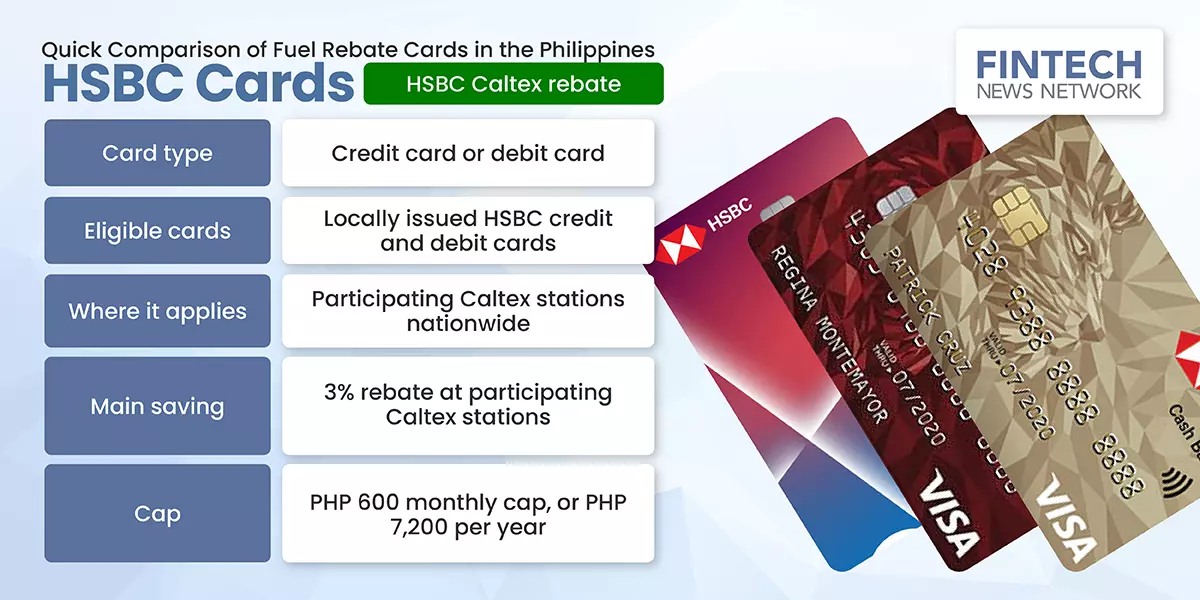
HSBC cardholders can get fuel rebates at participating Caltex stations.
The standard rate is 3%, with a monthly rebate cap.
The offer works best for moderate Caltex users because the cap limits the total annual value. Heavy drivers however, may need to compare it with cards that have higher yearly rebate ceilings.
MariBank Debit Card
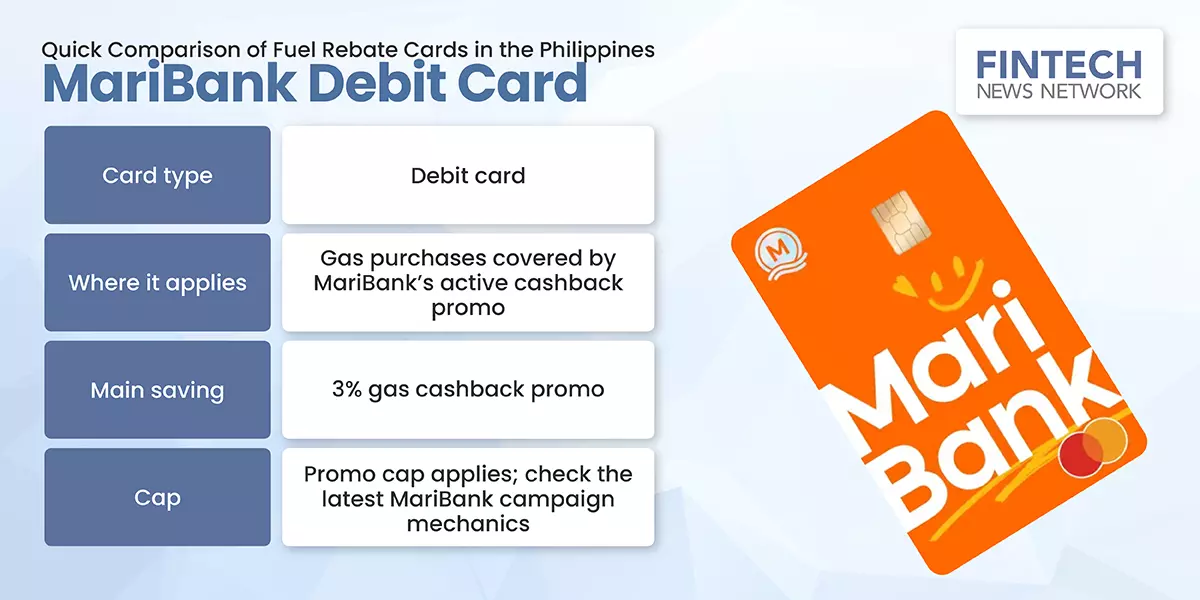
MariBank gives drivers a debit card route into fuel cashback, making it more accessible for users who want rewards without applying for a traditional credit card.
Currently it’s running a promo that gives you 3% cashback every time you fuel which will end on 30th June 2026.
Since the gas cashback is promo-based, readers should check the latest MariBank campaign dates and mechanics before relying on it.
Maya Landers Cashback Credit Card
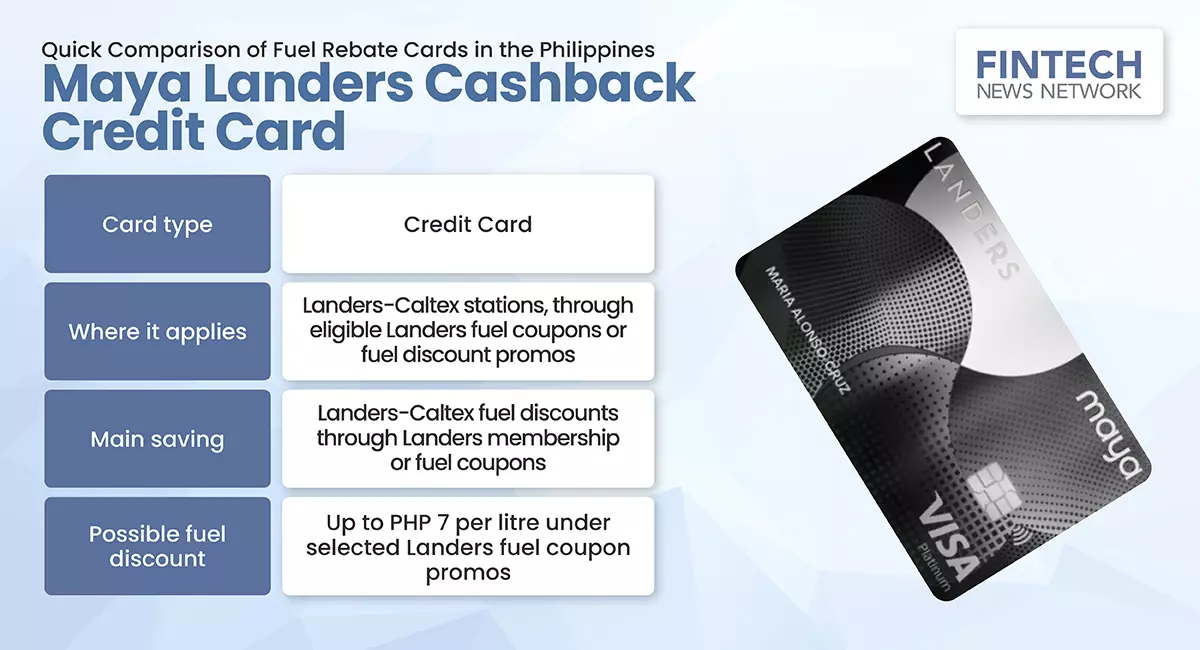
Maya’s Landers Cashback Credit Card works best as a Landers-linked card rather than a straightforward fuel rebate card.
The fuel benefit comes through Landers-Caltex, where cardholders may get fuel savings such as PHP 7 per litre under eligible Landers-Caltex offers.
Cardholders should still check the latest Maya and Landers terms before relying on the fuel benefit.
Maya’s cashback rules exclude petrol transactions other than Caltex, and cashback earning still depends on the card’s qualifying spend rules, merchant tagging and applicable promo mechanics.
The card may suit Landers members who already shop at Landers and gas up at Landers-Caltex. Drivers who do not use the Landers ecosystem regularly may find the benefit less useful.
GoTyme Visa Debit Card
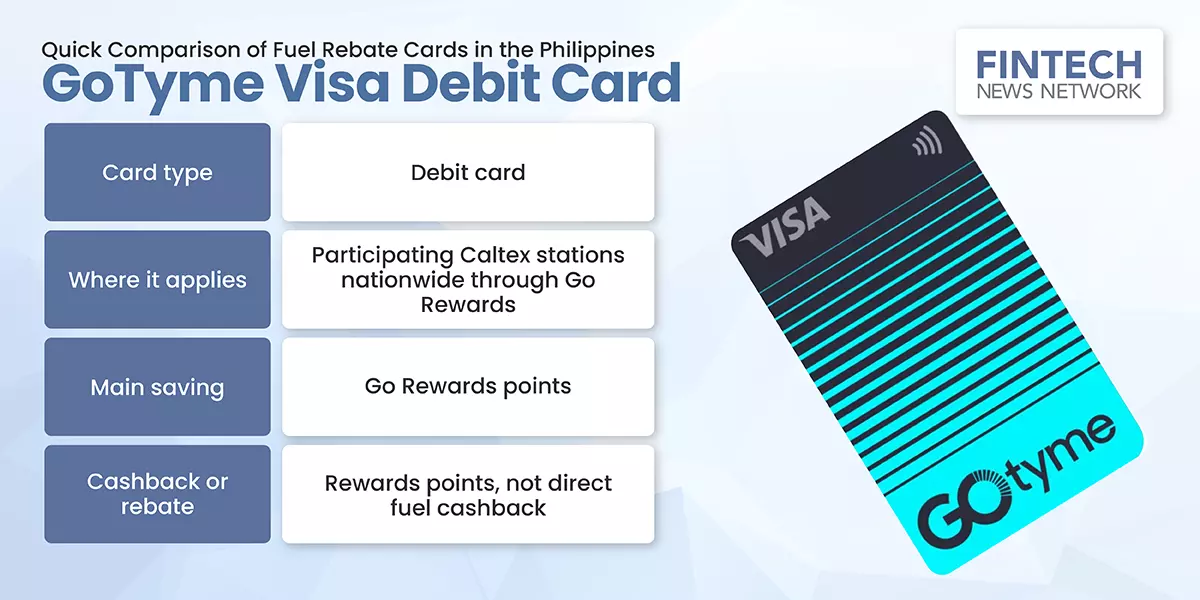
GoTyme takes a different route from the usual fuel rebate card.
Instead of giving cashback after a fuel purchase, it lets users earn Go Rewards points when they gas up at participating Caltex stations.
Those points can then be redeemed within the Go Rewards ecosystem, which may appeal to drivers who already use GoTyme for everyday spending.
FAQs About Fuel Rebates in the Philippines
1. What is a fuel rebate?
A fuel rebate returns part of a cardholder’s fuel spending. The bank usually credits the rebate after the transaction appears on the statement, so drivers may not see the saving at the pump immediately.
2. Do all fuel rebate cards work at any gas station?
No. Some cards only work with specific fuel partners, such as Shell, Petron, Caltex or Unioil. Other cards cover more gas stations, but the transaction must still qualify as an eligible fuel purchase under the issuer’s rules.
3. What is the difference between a fuel rebate and a fuel discount?
A fuel rebate gives value back after the purchase. A fuel discount reduces the price more directly, often through a peso-per-litre discount at the station.
4. Can debit cards offer fuel cashback in the Philippines?
Yes. Some debit cards and digital banking cards now offer fuel-related cashback or rewards.
MariBank has promoted gas cashback through its debit card, and GoTyme users can earn Go Rewards points at participating Caltex stations.
5. Why does the rebate cap matter?
The rebate cap determines how much a cardholder can earn back. A card may advertise a high rebate rate, but the savings stop growing once the cardholder reaches the monthly or annual cap.
6. Which fuel rebate card works for Shell users?
UnionBank’s Shell Power Visa cards serve Shell users in this list.
The Platinum card offers a 5% rebate with a higher annual rebate cap, and the Gold card can reach up to 5% if the cardholder meets the required non-fuel spend.
7. Which fuel rebate card works for Petron users?
The Petron BPI Mastercard serves Petron users in this guide. It gives a 3% fuel rebate at Petron stations nationwide, with an annual fuel rebate cap.
8. Which cards or programmes work with Caltex?
HSBC credit cards offer a 3% rebate at participating Caltex stations.
Maya Landers users may also get Landers-Caltex fuel discounts through eligible Landers fuel coupons, and GoTyme users can earn Go Rewards points at participating Caltex stations.
9. Which fuel rebate options are not tied to one fuel brand?
Chinabank allows eligible Platinum, World and Wealth Mastercard cardholders to earn rebates at any local gas station.
Metrobank’s Toyota Platinum Mastercard also covers eligible fuel transactions at any gas station worldwide. Readers should still check each issuer’s terms before relying on broader fuel categories.
10. Do fuel rebate promos expire?
Yes, some promos expire. EastWest’s Unioil offer runs from January 1 to December 31, 2026.
MariBank advertised its 3% gas cashback promo as running until June 30. Other fuel rebate features may not show a fixed end date on the official product page, but banks can still change terms, caps or promo mechanics.
11. Why might a fuel transaction fail to earn a rebate?
A fuel transaction may fail to earn a rebate if the station, terminal or merchant category does not match the issuer’s requirements.
Cardholders may also lose the rebate if the purchase exceeds a cap, misses a promo condition or falls outside the eligible station list.
12. Should drivers choose the card with the highest rebate rate?
Not always. A higher rate may look attractive, but drivers should compare where they usually gas up, how much fuel they buy and whether they can meet the card’s conditions.
Featured image: Edited by Fintech News Philippines based on an image by rawpixel.com via Magnific.
Infographic images: Edited by Fintech News Philippines based on an image by harryarts via Magnific and the respective bank websites.
