


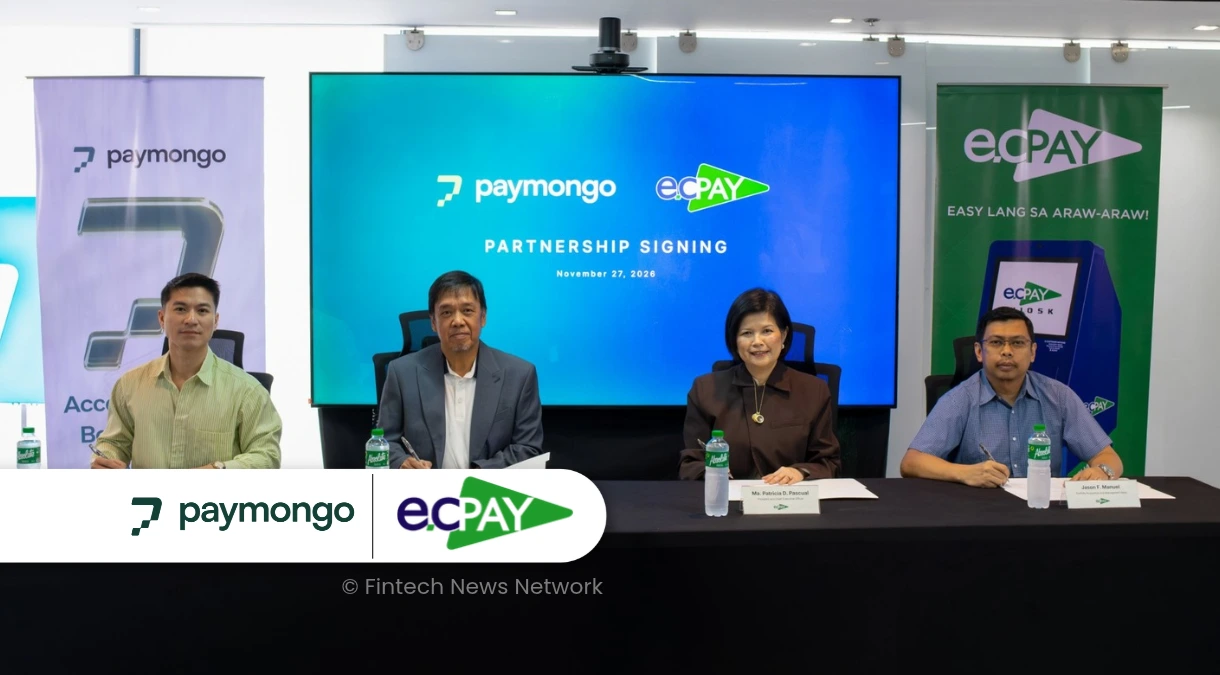
PayMongo has partnered with ECPay to let Filipino businesses pay bills, salaries and SSS, PhilHealth and Pag-IBIG contributions from the same account where they receive payments.
Both companies signed the deal on 27 November in Bonifacio Global City. A go-live date will follow integration and testing.
One Balance for Paying and Getting Paid
Merchants will be able to pay more than 900 ECPay billers, including utilities, telcos, insurers and government agencies, from their PayMongo balance.
Payroll and government contributions will no longer need a bank portal or separate agency logins.
PayMongo says this makes it among the first Philippine fintechs to combine collections, payroll and contributions.
PayMongo, which introduced a business wallet for SMEs, already pools card, e-wallet, QR Ph and over-the-counter collections in one balance.
“Individuals have been paying bills from their phones for years. We want to bring that same convenience, security, and confidence to businesses,” said PayMongo CEO Jojo Malolos.
A Bigger Cash Network for Shoppers
ECPay will also let PayMongo merchants’ customers pay cash at around 490,000 over-the-counter touchpoints, more than 15,000 kiosks and sari-sari stores nationwide.
The Cost of Paying Late
Many small business owners still run payroll themselves, sometimes paying each contribution through a personal e-wallet.
Late SSS contributions carry a 2% monthly penalty under Republic Act No. 11199, which also makes company officers liable for wilful non-remittance.
Late Pag-IBIG contributions cost about 3% a month under Republic Act No. 9679.
MSMEs make up 99.6% of business establishments and 67% of employment in the Philippines, according to the Department of Trade and Industry.
Featured image: Edited by Fintech News Philippines based on an image by Paymongo via its Press Release.
