



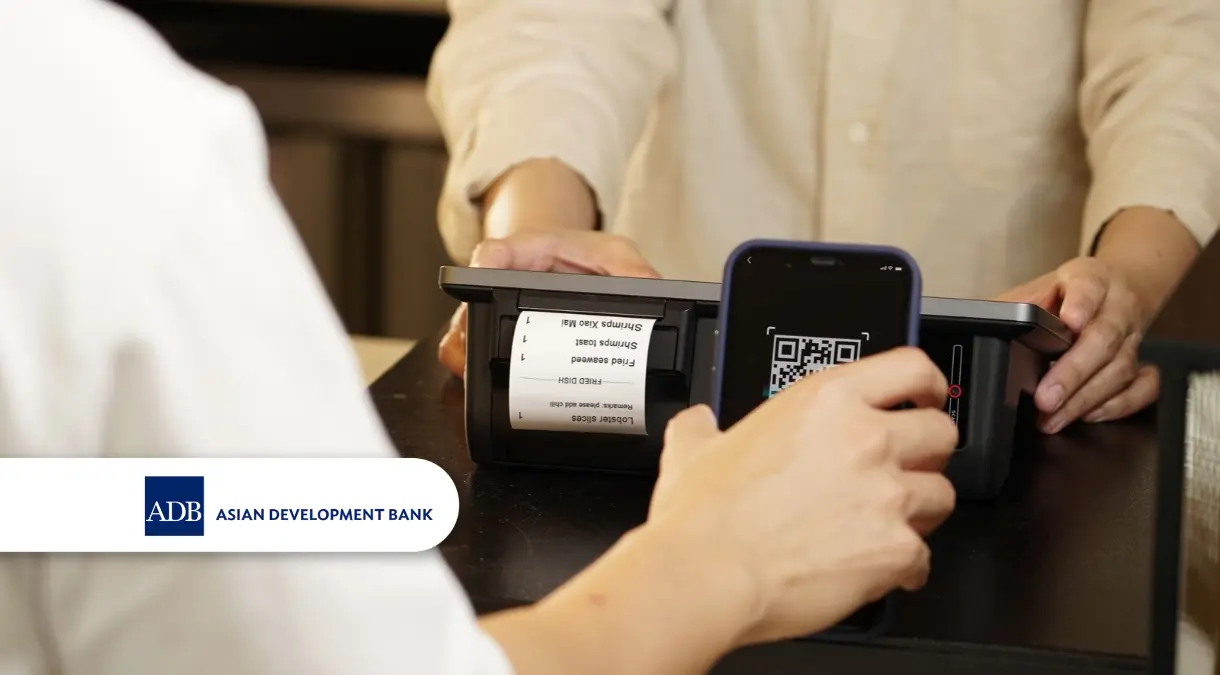
The Asian Development Bank (ADB) has highlighted the Philippines’ digital payments growth as an example of how interoperable payment systems can widen adoption, Manila Bulletin reported.
In its report on digital trade in Asia and the Pacific, the ADB said the interoperability of the Philippine payment system was critical to its success.
It credited national payment standards with lowering the cost of digital transactions for micro, small and medium enterprises (MSMEs).

Beating the 2024 Target
The ADB cited figures showing digital payments made up 57.4% of monthly retail transactions by volume in 2024, up from 52.8% in 2023.
By value, the share rose to 59% from 55.3%.
That beat the government’s 2024 goal of digitalising 52% to 54% of retail transactions, the Philippine Daily Inquirer noted.
QR Ph Takes the Lead Over Cards
The Bangko Sentral ng Pilipinas (BSP) has since published its 2025 figures.
Digital payments accounted for 64.7% of retail payment volume last year, placing the country within the Philippine Development Plan’s target of 60% to 70% by 2028, Manila Bulletin reported in August.
QR Ph transactions also overtook debit and credit card transactions in volume for the first time in 2025. Digital payment accounts rose 69.4%, while merchant locations accepting digital payments grew 36.3%.
Digital at Home, Stuck at the Border
The ADB also issued a broader warning for the region. Many developing economies have signed digital trade commitments without putting the needed rules, institutions and infrastructure in place.
Electronic invoices, digital signatures and payments may work well at home.
Across borders, however, they often fail to connect, according to a summary of the report.
To help close these gaps, the ADB introduced a Digital Trade Readiness Road Map.
It recommends stronger coordination between government agencies, better cross-border compatibility of digital systems and more support for small businesses adopting electronic payments, invoicing and authentication.
Featured image: Edited by Fintech News Philippines based on an image by iMin Technology via Pexels.
