


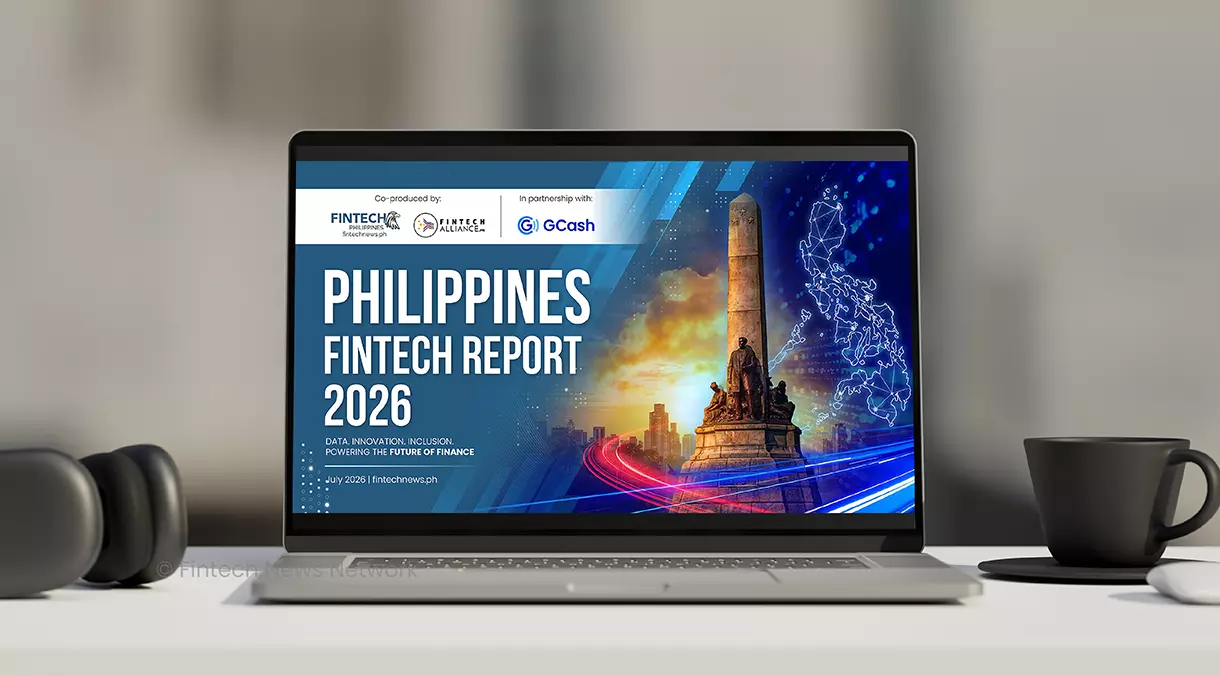
Throughout 2025 and early 2026, the Philippines successfully transformed digital finance from a national ambition into an everyday habit for millions of citizens. Capturing this inflexion point, the Philippines Fintech Report 2026 provides a comprehensive map of where the nation’s fintech ecosystem stands today and where it is heading next.
Stepping into the spotlight as the ASEAN Chair for 2026, the country has placed its digital economic ambitions at the centre of a broader regional growth agenda.
The numbers signal a mature, cash-lite economy: digital retail payments have crossed the halfway mark by both volume and value, while licensed digital banks have established formidable deposit bases.

At the same time, cryptocurrency has evolved beyond speculation into everyday utility, driving remittances, payroll, and QR transactions.
Key milestone events, such as fintech operator Mynt preparing what could be the largest stock market listing in Philippine history and MariBank becoming a digital bank, indicate that the market is visibly shifting towards long-term scale.
What does the latest data reveal about this market evolution, and crucially, what trends will define its next chapter?
The Philippines Fintech Map Now Tracks 370 Companies
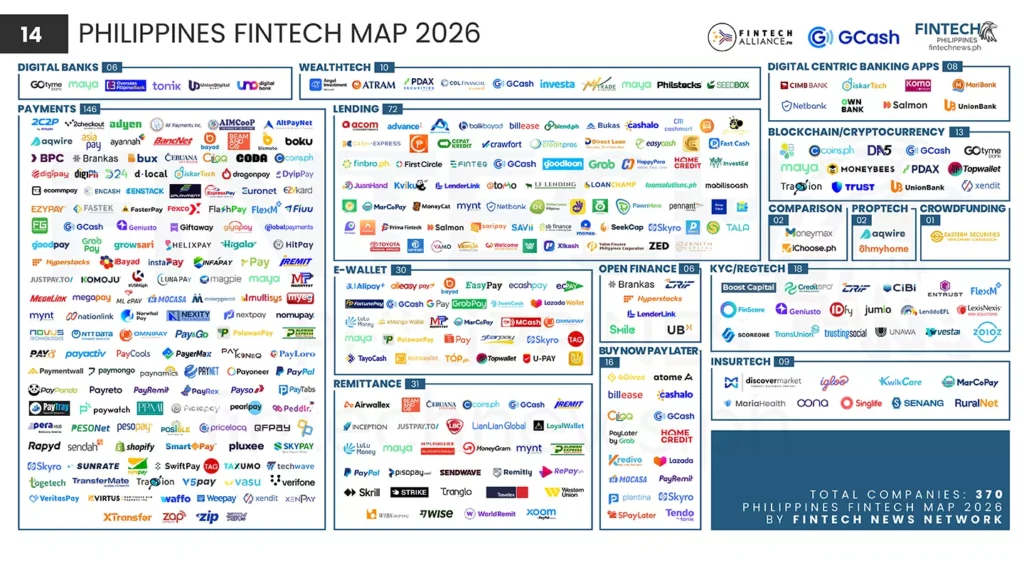
Fintech News Philippine’s map for 2026 now charts 370 active companies. Payments remains the largest category with 146 firms, followed by lending with 72, remittance with 31, and e-wallets with 30.
Accounting for nearly 25% of all mapped fintechs, the ~90 lending and BNPL platforms demonstrate how deeply consumers rely on digital credit.
This reflects a large population with strong appetite for consumer credit, and it possibly explains why the SEC has been tightening digital lending practices and lifting its platform ban for registering new online lending platforms.
Meanwhile, 31 remittance providers continue to optimise the vital overseas capital pipeline, with Western Union, Wise and Xoom competing with GCash and Maya.
Digital Banking Competition Intensifies as New Players Enter

The Philippines’ six licensed digital banks had grown to PHP 119.5 billion in combined deposits and around 20.4 million customers by September 2025, according to data from the report. Maya Bank and Overseas Filipino Bank were reported as profitable, a possible reflection of intense deposit competition.
As of December 2025, deposits remain anchored around the market’s two largest players. Maya leads with PHP 67.7 billion, leveraging a super-app model embedded within its broad merchant network.
GoTyme Bank follows with PHP 43.5 billion, deploying a distinct phygital model of mobile banking and high-footprint retail kiosks as it eyes profitability by 2027.
Now, the competitive landscape is opening up. Following the BSP’s decision to increase the licensing cap to 10, MariBank (formerly SeaBank Philippines, a subsidiary of Sea Limited) formally transitioned from its rural bank framework in July 2026 to become the nation’s seventh digital bank.
With three slots remaining, the BSP is currently reviewing contenders to shortlist more digital bank candidates. As global fintechs like Revolut are touted as prospective entrants, existing operators warn that fresh competition may delay the sector’s timeline to sustainable profitability.
Digital Payments Continue Their Rapid Rise
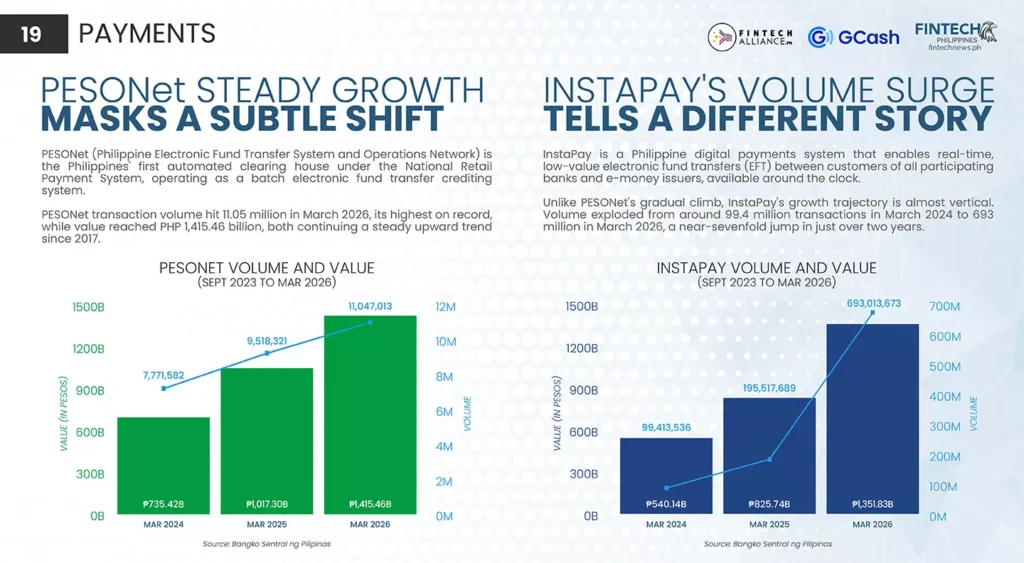
The performances of InstaPay and PESONet provide the clearest evidence of digital finance becoming an everyday habit.
As the country’s 24/7 real-time rail for low-value transactions, InstaPay experienced massive real-time payment growth. Monthly transaction volume exploded from 99.4 million in March 2024 to 693 million in March 2026, a near 7X in two years. Monthly transaction value grew in tandem, rising from PHP 540.14 billion to PHP 1,351.83 billion.
Meanwhile, PESONet’s electronic batch clearing system reflects a steadier trajectory tailored for larger sums. Volume reached a record 11.05 million transactions in March 2026, with total value rising to PHP 1,415.46 billion, continuing the gradual upward path both networks have maintained since 2017.
This contrast highlights a clear behavioural evolution: the Philippine public is actively using instant micro-transfers throughout the day for daily expenses, while reserving batch payments for structured, higher-value transfers.
A Top 10 Crypto Market Turns Practical

The Philippines continues to prove itself as one of the world’s most resilient grassroots crypto hubs, placing ninth globally in Chainalysis’ 2025 Global Crypto Adoption Index. This sustained position highlights a clear consumer appetite for functional financial tools that bypass traditional cross-border frictions.
Providing the framework for this activity, the BSP had regulated 10 active Virtual Asset Service Providers (VASPs) as of October 2025. This supervised list spans major non-bank exchanges like Coins.ph, PDAX, Maya, and Moneybees to banking institutions such as GoTyme Bank and UnionBank.
The market’s momentum has visibly shifted toward real-world transaction utility. On the retail front, major e-wallet platforms expanded consumer access to dollar-backed stablecoins like USDC.
Meanwhile, infrastructure partnerships like PDAX’s collaboration with Toku now enable remote workers to receive stablecoin salaries that settle directly into domestic bank accounts and e-wallets, cementing crypto’s role in the everyday economy.
Inside the Trends Set to Redraw Philippine Finance
This summary captures only part of the latest developments taking place in the Philippines’ fintech market. The wider story sits in the funding rounds, regulatory circulars, financial inclusion drives and digital banking data that will shape the market’s next phase.
The Philippines Fintech Report 2026 unpacks the year’s defining developments, from FinTech Alliance PH’s 80×80 inclusion goal for 2028 to card payment forecasts, satellite-linked banking and the proposed Open Finance Act.
Download the full report to access the complete analysis.
| Download The Philippines Fintech Report 2026 |
Other resources you might be interested in
Curious about other Asian Fintech Startup Maps and Report? Here’s a handy guide looking at the fintech startup maps in Asia by country.

and the fintech startups report in Asia by country.