



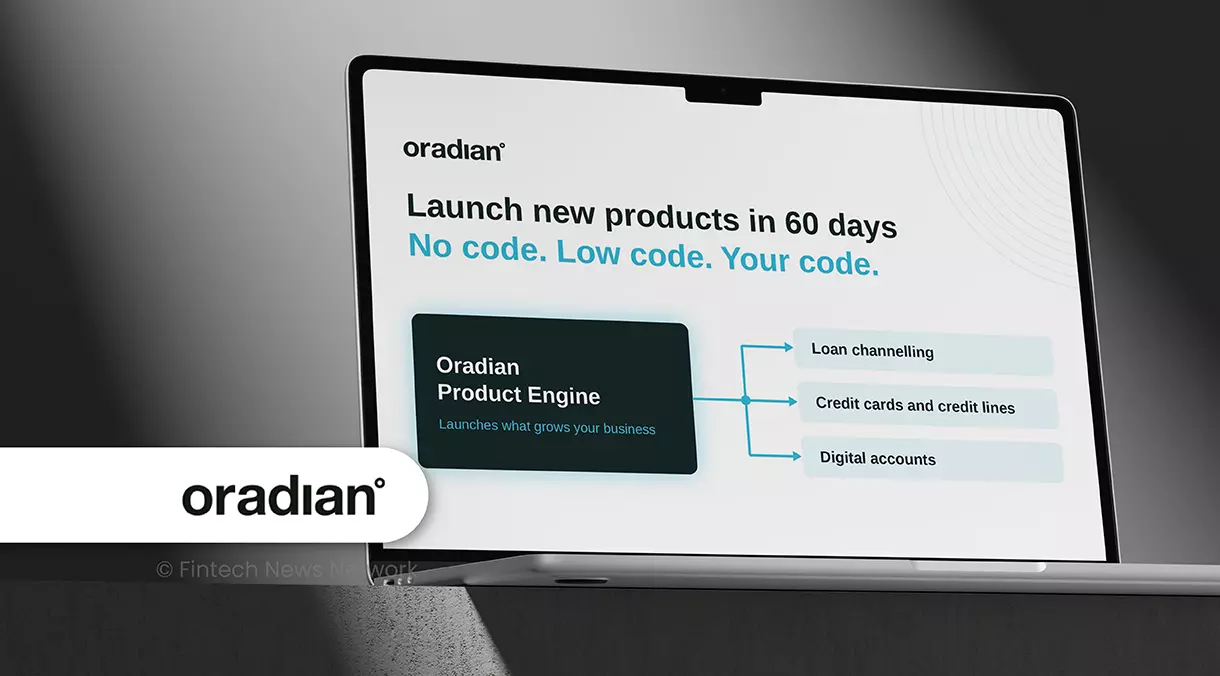
Launching a new financial product has often meant waiting for a core vendor to fulfil change requests, building workarounds, or committing to a core banking replacement.
A product engine offers another route, and what follows covers what one is, how it sits alongside a legacy core, and which products it can support.
Why Product Launches Take So Long
Digital banks, regulated financial institutions and scaled consumer finance operators have traditionally faced three options when launching a growth product.
They could wait months for an incumbent core vendor to fulfil custom change tickets, build workarounds that create engineering debt, or commit to replacing the core banking system.
Being able to launch quickly counts for more where credit demand is growing. In the Philippines, consumer loans covering credit cards, car finance and salary advances grew 19.6% year on year in April.
The same report noted that bad loans across the banking system rose to 3.37% of total lending that month, the highest since August 2025, and quoted Fitch Ratings warning that banks have become more susceptible to economic shocks as their unsecured exposure grows.
GlobalData also forecasts card payments to almost double between 2024 and 2029.
Meanwhile, Bank Indonesia launched Kartu Kredit Indonesia in August 2026, a domestic credit card scheme that starts as a digital card for QRIS payments.
What a Product Engine Does
A product engine is a lightweight layer of infrastructure that manages the lifecycle, behaviour and rules of financial products such as loans, revolving credit and digital accounts, without requiring updates to the core legacy system.
It runs alongside existing infrastructure, which keeps handling standard operations, while the institution’s own team uses the engine to launch entire product lines.
What Oradian Says It Offers
On speed to market, Oradian says some companies can launch products within a few weeks.
Nigerian neo-bank FairMoney, a customer, launched its first product on the platform within eight weeks on a project that began in 2022.
According to the company, a product engine also gives institutions the growth-enabling features of a modern core banking system without a full implementation, and moves control of product iterations from third-party IT vendors to internal teams.
Risk teams keep control because the engine is governed, versioned, auditable, reversible and forward compatible.
Agents can also work on live data, so limits, pricing and risk decisions respond to what customers are doing now.
Three Product Lines It Can Support
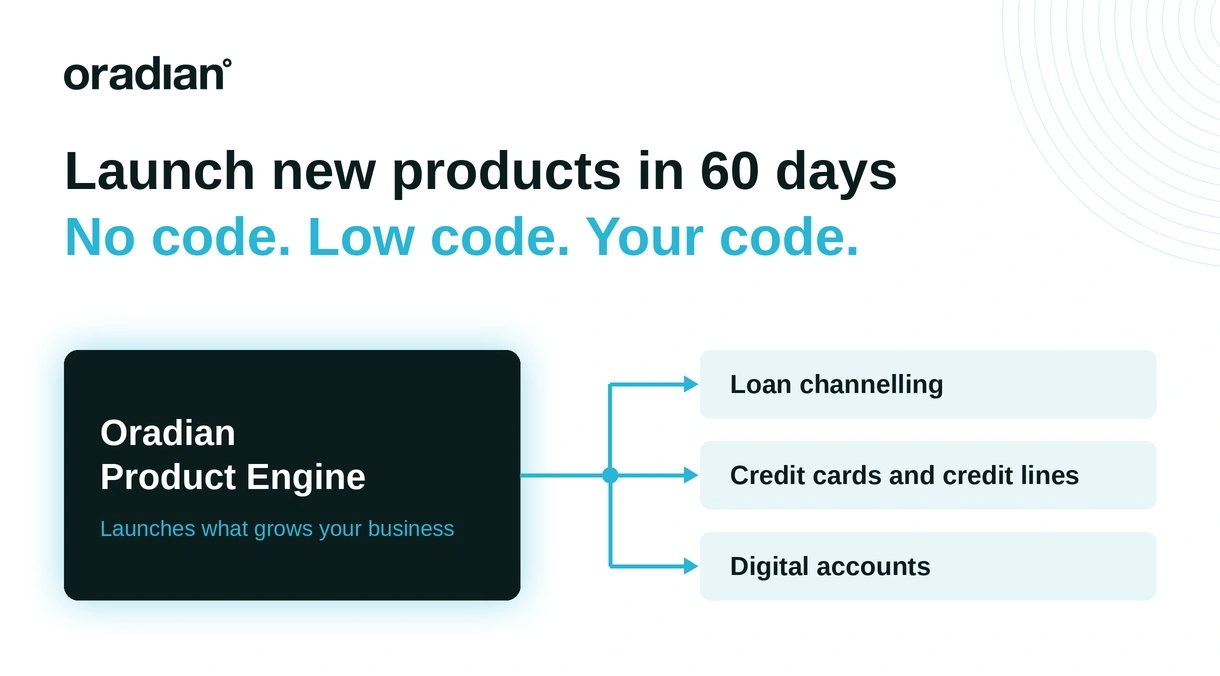
Loan channelling is one use.
Product teams can set up rates, fees and rules in minutes without code, while engineering teams use APIs to connect partners directly to tailored loan products.
Credit cards and credit lines are another.
When new payment rails create demand, as with Indonesia’s Kartu Kredit Indonesia initiative running over QRIS, institutions still need a system that manages credit facilities, dynamic limits, utilisation, pricing, interest accruals, drawdowns, repayments and risk exposure.
Digital accounts are a third.
Traditional banking cores were not built for millions of small, daily wallet transactions, and the company says its product engine can run digital wallet accounts that process up to 12,000 balance updates per second in real time.
Where AI Fits In
The company argues that AI projects stall when operational data sits in legacy silos.
MIT’s Project NANDA found that roughly 95% of enterprise generative AI pilots deliver zero measurable return.
In its model, the product engine runs the products.
Governed access to operational data sits above it and gives teams a current view of what is happening inside those products, and the institution’s own code, running its own logic, sits above that.
AI then works across all three layers on live data, with a controlled place for its decisions to take effect.
Teams can build on the engine without code, with low code, or with their own code.
No-code configuration lets them set rates, fees, schedules and eligibility in minutes, without vendor tickets.
Low-code work connects channels, payment rails, eKYC and ecosystems through APIs, with response times under 100 milliseconds.
Custom code covers proprietary product logic, built through a governed extension framework and supported by integrated AI tooling.
On performance, the engine runs at 99.98% uptime and handles 8,800 transactions per second, with more than 750 native API endpoints that stay backwards compatible, according to Oradian.
A Third Option Beyond Waiting or Replacing
In Oradian’s view, institutions do not have to choose between accepting vendor delays and taking on a multi-year core replacement.
Adding a product engine to the existing core is presented as a third option, one that returns control of product and engineering work to the institution’s own teams.
The company has published a guide, Launch your next product without touching your core, that sets out the approach in more detail.
Featured image: Edited by Fintech News Philippines based on an image by user28295394 via Magnific.
